This is the kind of page people search for when they are not casually browsing anymore. They want numbers. They want to understand risk. And most of all, they want to know whether a tire recycling plant can actually make money in the real world, not just on a supplier brochure.
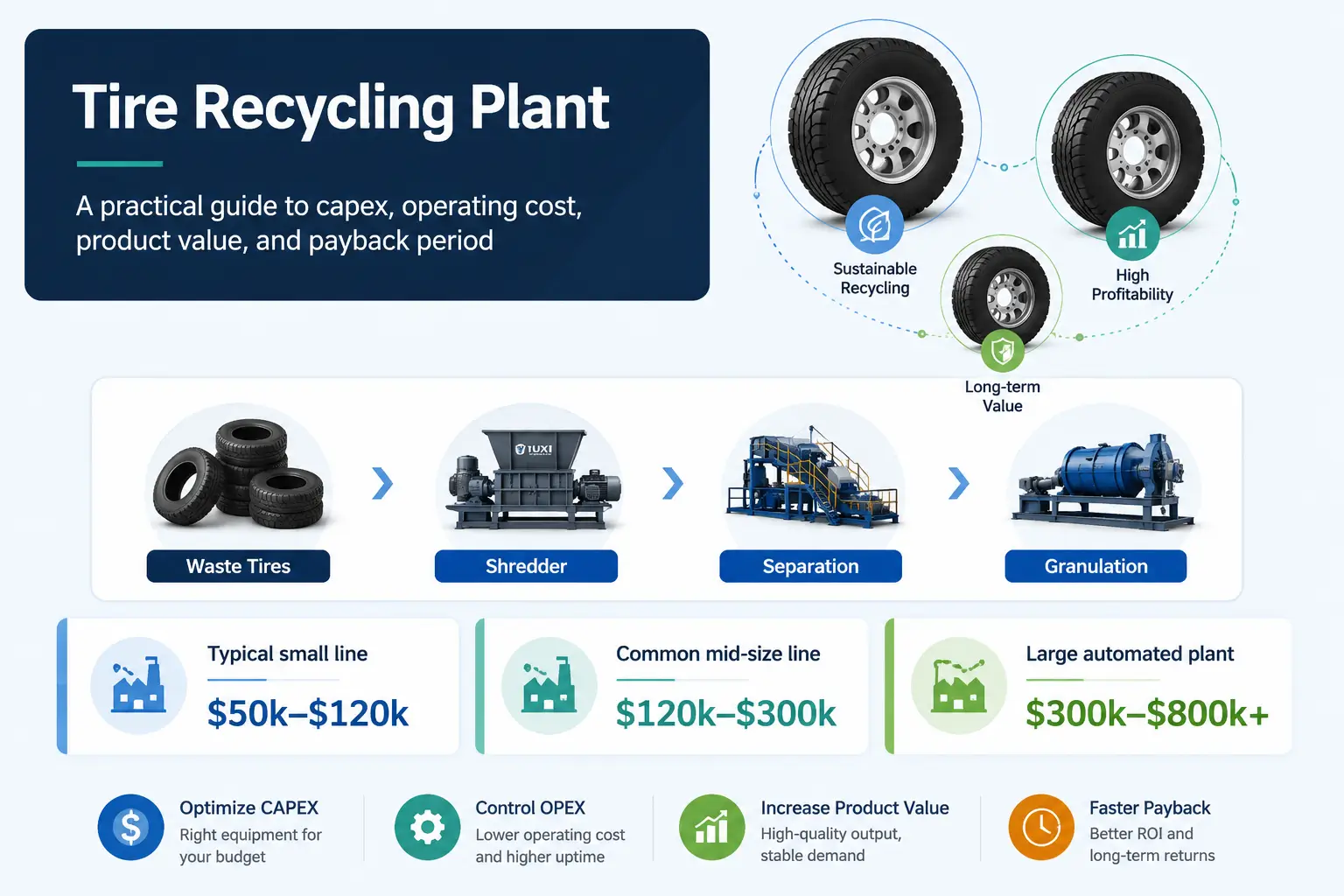
If you compare the pages that usually rank for this keyword, they tend to do three things: they show a broad price range, they mention capacity, and they say tire recycling can be profitable. That is useful, but it is not enough for someone who is seriously evaluating a project. The bigger questions are always the same: what exactly affects the investment, where do projects go wrong, and what kind of line configuration makes sense for my market?
Why this is not just a machine-price question
One of the biggest mistakes in this industry is treating “plant cost” as if it were the same thing as “the price of one shredder.” It is not. A tire recycling plant is a system. Yes, the shredder matters. But the final investment is shaped by the full process: pre-treatment, shredding, wire removal, granulation, fiber separation, dust handling, control systems, plant layout, utilities, and the output quality you want to sell.
That distinction matters because two buyers can ask for “a 3 ton per hour line” and end up with very different budgets. One may only need rough chips for low-value downstream use. Another may want fine rubber powder with tighter consistency, better steel recovery, cleaner output, and lower labor input. On paper, the capacity is similar. In practice, the plant design is not.
Practical takeaway: if you only compare quotations by total price, you can easily buy the wrong line. The better comparison is price for the output quality and operating model you need.
What does a tire recycling plant usually cost?
For most buyers, a reasonable starting point is to think in ranges rather than exact numbers. Small projects can sometimes start around the lower tens of thousands of dollars. Medium-capacity commercial lines sit much higher. Large, more automated plants can move into several hundred thousand dollars or more once you include the full system and local installation requirements.
| Plant scale | Typical capacity | Indicative investment range | What that usually means |
|---|
| Small | 1–2 ton/h | US$50,000 – US$120,000 | Entry-level or simpler setup, limited automation, suitable for budget-sensitive starts |
| Medium | 3–6 ton/h | US$120,000 – US$300,000 | Better fit for serious commercial operation and more stable output quality |
| Large | 6–10 ton/h and above | US$300,000 – US$800,000+ | Higher automation, more process stages, larger utilities, broader plant infrastructure |
Those numbers are best treated as commercial planning ranges, not fixed quotations. A project can move upward quickly if the buyer wants finer output, cleaner separation, lower labor dependence, or more customized engineering. It can also move downward if the target is simply to reduce tire volume before downstream resale or processing.
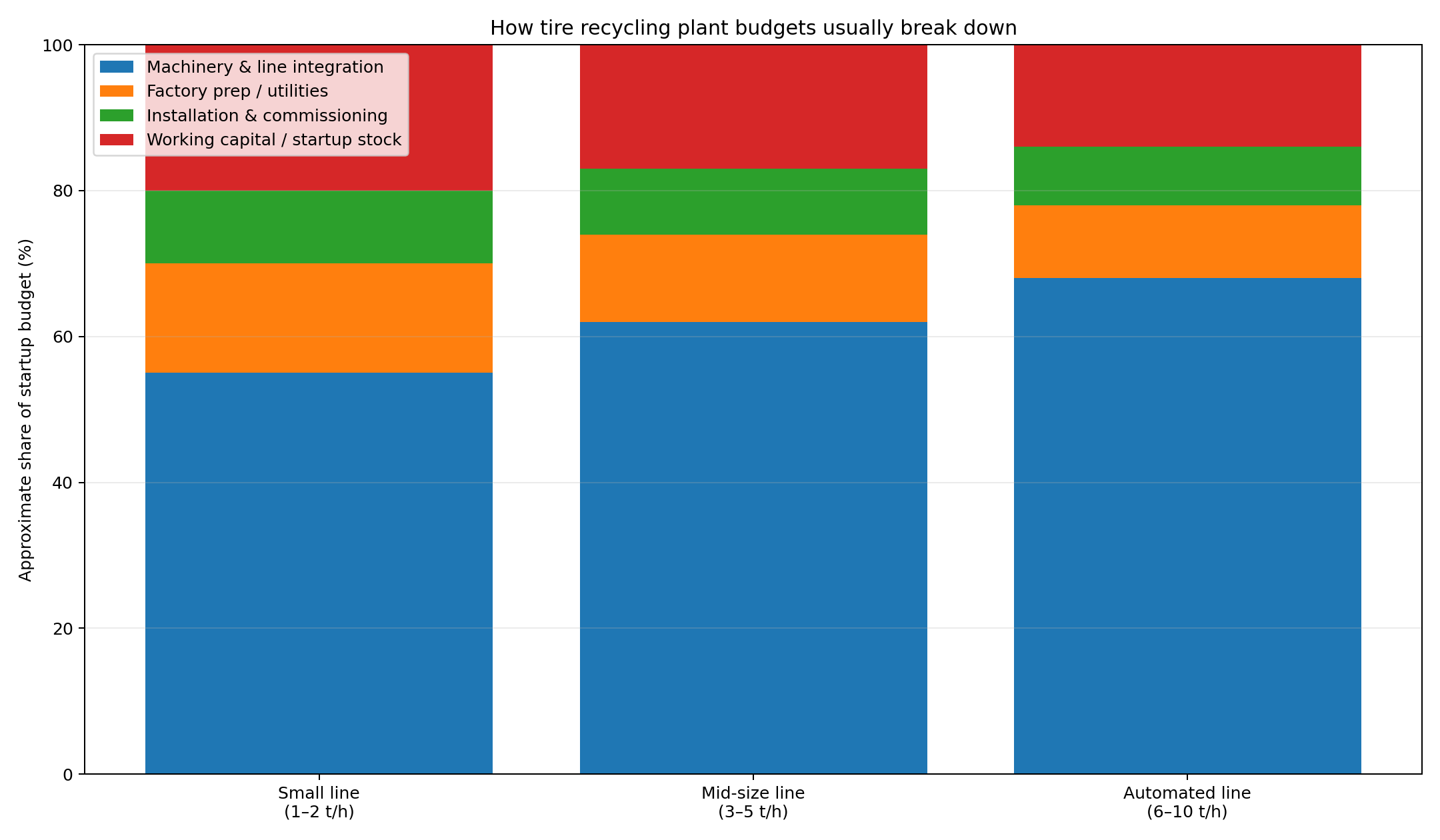
The four cost drivers that matter most
1) Output size and product target
This is where many quotations become misleading. If your goal is coarse tire chips, the line can be simpler. If your goal is granules, rubber powder, or a cleaner, more consistent output stream, more separation and finishing stages are typically involved. That means more equipment, more controls, and more energy demand. In other words, the saleable product you want at the end of the process determines a large part of the cost at the beginning.
2) Automation level
Labor is not cheap forever. Many buyers initially try to reduce capital spending by accepting a less automated configuration, but that can be a false economy if labor availability is unstable or if process consistency matters. A more automated line often costs more upfront, yet it may be easier to run, easier to scale, and more predictable in daily output. That trade-off is especially important for buyers planning to sell into repeat industrial channels rather than one-off spot markets.
3) Equipment durability and maintenance logic
On a quotation sheet, two machines can look similar. In operation, they can be completely different. Blade wear, shaft strength, bearing quality, accessible maintenance design, and control reliability all affect whether the line makes money month after month. The cheapest line is not always the most economical line. Downtime has a cost. Unstable output has a cost. Frequent maintenance has a cost. That is why serious buyers should ask how the line behaves after installation, not just how it looks on delivery day.
4) Layout and site engineering
Plant layout is one of the most underestimated parts of the project. Poor material flow increases handling time, internal transport, dust management complexity, and supervision effort. A good layout reduces friction. It also makes future expansion easier. This is one reason custom site design is not a marketing extra; it can materially affect the economics of the plant over time.
A realistic way to ask for a quote
Instead of saying “send me your best price,” a much better request is: “I plan to process this type of tire, at this capacity, into this output size, with this labor target and this available space.” That usually leads to a more useful proposal and avoids the classic problem of comparing machines that are not solving the same task.
What buyers often forget
Power availability on site
Dust handling and collection
Local market for rubber and steel
Future spare parts and service access
The hidden costs that make or break the project
If you read enough supplier pages, you will notice that most of them are comfortable discussing machine price and very comfortable discussing profit. The part in the middle — the operating reality — is usually where the article becomes vague. But that middle section is exactly where your result is decided.
Feedstock cost and quality
Waste tires are not “free money.” In some markets, feedstock is abundant and cheap. In others, collection competition pushes up the real cost per ton. Tire type also matters. Mixed passenger and truck tires behave differently from oversized or heavily contaminated inputs. If the feedstock assumption is wrong, the whole ROI model becomes optimistic on day one.
Logistics
Whole tires are bulky. That means transport and storage planning matter more than many first-time investors expect. It is common to see people focus on processing cost while underestimating collection radius, vehicle loading inefficiency, and temporary stockpile management. A project can look attractive on paper and still disappoint because tire movement is more expensive than expected.
Electricity and utilities
Power consumption is not just a technical note. In some regions it is a strategic variable. If electricity is expensive or unstable, the economics change immediately. You also need to think beyond the nameplate power of one machine and consider the total line load, startup peaks, dust collection, conveyors, and any finishing stage needed for finer output.
Maintenance discipline
Every industrial recycling line needs maintenance. The question is whether maintenance is manageable and predictable, or frequent and disruptive. Buyers who purchase solely on price sometimes learn this the hard way. A plant that stops often, produces inconsistent output, or is difficult to maintain can quietly destroy the margin you hoped to make.
What experienced operators usually care about: not just “How much does the line cost?” but “What will one normal week of operation feel like once we start?”
Can a tire recycling plant actually be profitable?
Yes, it can. But it is much more accurate to say that a tire recycling plant can be profitable when the project is built around the local reality. This is not a fantasy business, but it is also not a guaranteed one. Good projects usually have three things in common: stable feedstock access, a clear outlet for rubber and steel, and a line configuration that matches the expected output quality.
A simple way to think about margin is to start with four buckets: feedstock cost, energy and labor, downtime and maintenance, and selling price of the recovered output. If those four variables are understood honestly, you can usually tell whether the business is promising or merely exciting on paper.
| ROI question | Good sign | Warning sign |
|---|
| Feedstock supply | Stable local collection channels | Need to buy tires at unpredictable prices |
| Output market | Known buyers for rubber and steel | No clear off-take channel after production |
| Utilities | Affordable and reliable electricity | High power cost or unstable supply |
| Operations | Manageable labor and maintenance routine | Plant depends on constant manual intervention |
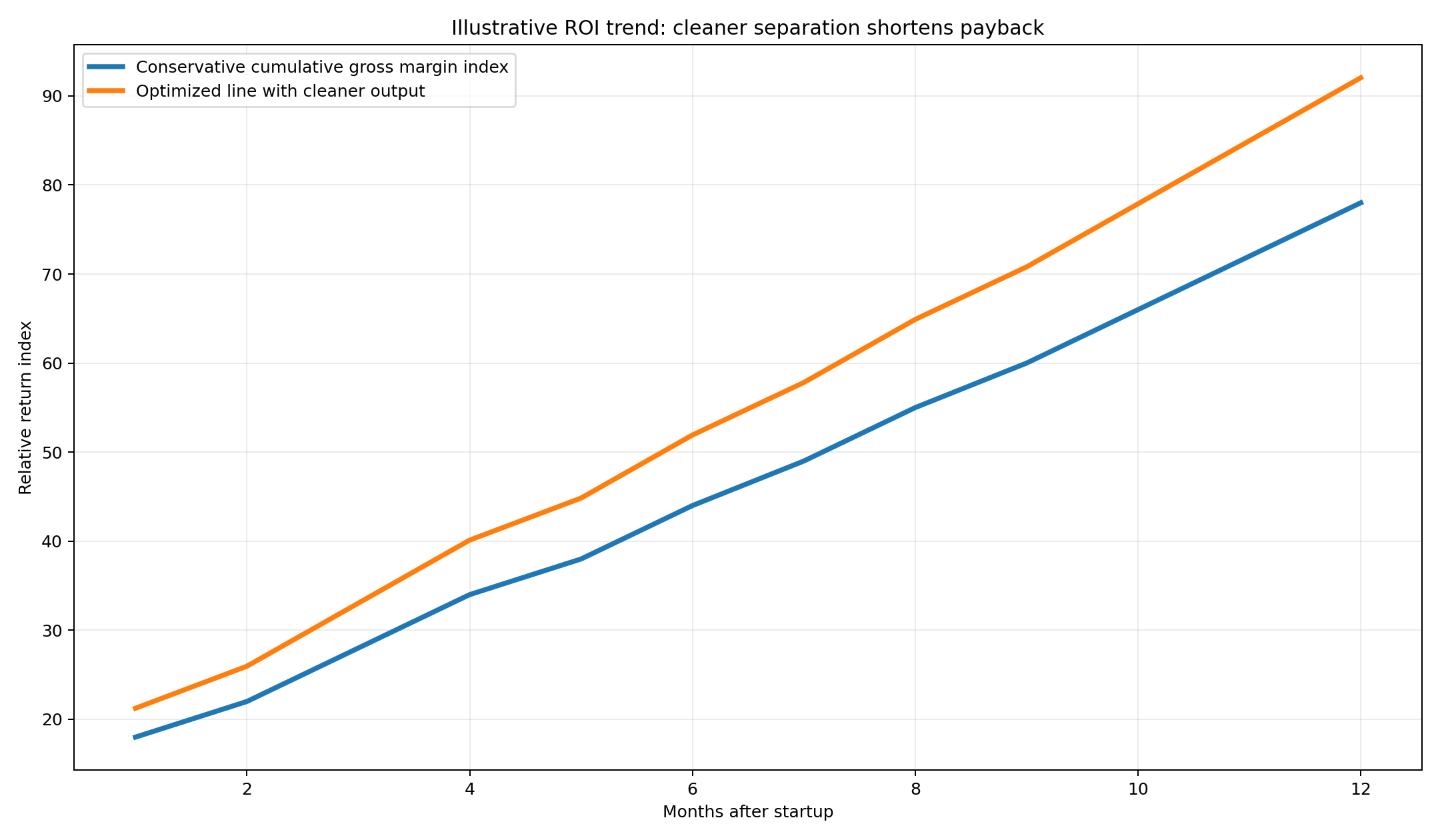
A medium-capacity project may target a payback window of roughly 4 to 8 months under favorable conditions, but it would be irresponsible to present that as a promise. In practice, ROI depends on how carefully the project is structured. The honest approach is not to advertise the shortest possible payback period. It is to test the economics against real operating assumptions before the line is purchased.
How Yuxi / ShreddingTech approaches a tire recycling project
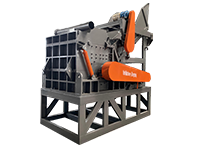
What makes Yuxi / ShreddingTech useful in this conversation is not only the existence of a tire shredder product page. It is the fact that the company presents both the single-machine side and the complete-line side of the process. On the site, Yuxi’s Waste Tire Shredder is positioned for whole-tire size reduction, with listed feeding size of 100–2,600 mm, discharging size of 50–100 mm, and production capacity of 0.4–60 tons per hour depending on model and configuration. The same page also emphasizes site design and customization rather than treating every buyer as identical.
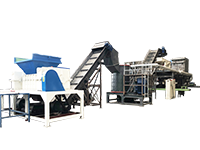
That matters because many buyers start with a shredder discussion and later realize they need a line discussion. Yuxi’s Full-automatic Waste Tire Recycling Line is where the system view becomes more explicit. The page states a production capacity of 200–10,000 kg/h, suitability for tire diameters of 400–4,000 mm, and use of a PLC control system for easier operation and maintenance. It also describes the line as a setup for separating rubber, wire, and nylon fiber, which is a more useful commercial framing than talking about shredding alone.
There is also a practical middle ground here. Some buyers do not need a giant turnkey line immediately. They may begin with a simpler configuration and scale. Others want to move more quickly toward a cleaner and more automated setup from the beginning. What helps is being able to match the plant to the target output and budget instead of forcing every project into a single template.
A realistic configuration path
For a buyer who wants a more complete commercial setup, the process often starts with pre-treatment or wire drawing, then moves into shredding, particle reduction, magnetic and fiber separation, dust control, and finishing. On Yuxi’s site, that logic is supported by related equipment pages such as the Tire Steel Wire Drawing Machine and the Tyre Grinding Mill, which makes internal linking natural for both users and search engines.
Why the company profile helps trust
Another useful point for a commercial page like this is the company profile itself. On the company page, Yuxi says it has obtained 32 patents and 3 invention patents, and that its products have been exported to more than 90 countries and areas. Those claims do not replace project-specific proof, but they do help a buyer understand that the company is presenting itself as a long-term manufacturer rather than a thin reseller.
Best use of this article on your site: keep it as a pillar page for the keyword “tire recycling plant cost,” then link to it from product pages, quote forms, and future blog posts about tire recycling profit, rubber powder uses, and tire shredder selection.
So, should you invest?
If you have stable access to feedstock, acceptable power economics, and a believable route to sell the output, this can be a serious industrial opportunity. If you do not, then the right next step is not to chase the lowest machine quote. It is to slow down and test the commercial assumptions first.
The strongest projects are usually not the ones with the most aggressive marketing language. They are the ones where the buyer understands what will happen after installation: how material arrives, how it moves through the plant, what quality comes out, who buys it, what the normal maintenance rhythm looks like, and how the operation scales.
That is also why a good supplier conversation should feel less like a catalog pitch and more like a project discussion. If the supplier only wants to send you a price and move on, that is a warning sign. If they want to understand your tires, target output, site space, labor plan, and local market, that is usually a better sign.
Get a custom tire recycling plant recommendation
If you are evaluating this business seriously, the most useful next step is a project-level discussion: what tires you plan to process, what output you want to sell, how much space you have, and what level of automation fits your budget.
Request a project discussion View the full tire recycling line
FAQ
What is the minimum investment for a tire recycling plant?
A small setup may begin around US$50,000, but that does not mean every project should. The right budget depends on output target, automation level, utilities, and the actual market you plan to serve.
Is tire recycling profitable?
It can be, especially when feedstock supply is stable and there is a clear sales path for rubber and steel. The weak projects are usually the ones that ignore logistics, output sales, or maintenance reality.
What equipment is usually included in a full line?
A full line often includes tire pre-treatment, shredding, granulating, magnetic separation, fiber removal, dust handling, and a control system. The exact sequence depends on the final output size and quality target.
How long does payback take?
A medium-capacity commercial setup may target a payback period in the range of 4 to 8 months under good conditions, but there is no universal answer. A realistic ROI model must include feedstock cost, utilities, labor, downtime, and output selling price.

 Shredding Machine
 Waste Recycling Line
 Optional Equipment