The tire recycling industry is booming—with the market expected to hit $8.2 billion by 2030, there's never been a better time to get in the game. But here's the thing: picking the wrong shredder can literally make or break your business. Too small and you'll be bottlenecked. Too big and you'll waste money. Let's nail this decision together.
Key Takeaway
Here's the deal: the best tire shredder for your operation depends on three things—what you're processing, how much you need to process, and what your end product looks like. After working with recycling operations in 90+ countries, we've learned one thing for sure: buy for tomorrow, not just for today. Get equipment with 30% more capacity than you currently need.
We've seen it all—a business that thrives because they picked the right machine, and ones that struggle for years because they didn't. This guide breaks down everything you need to know, so you can walk away with confidence when it's time to buy.
1. What Exactly Is a Tire Shredder?
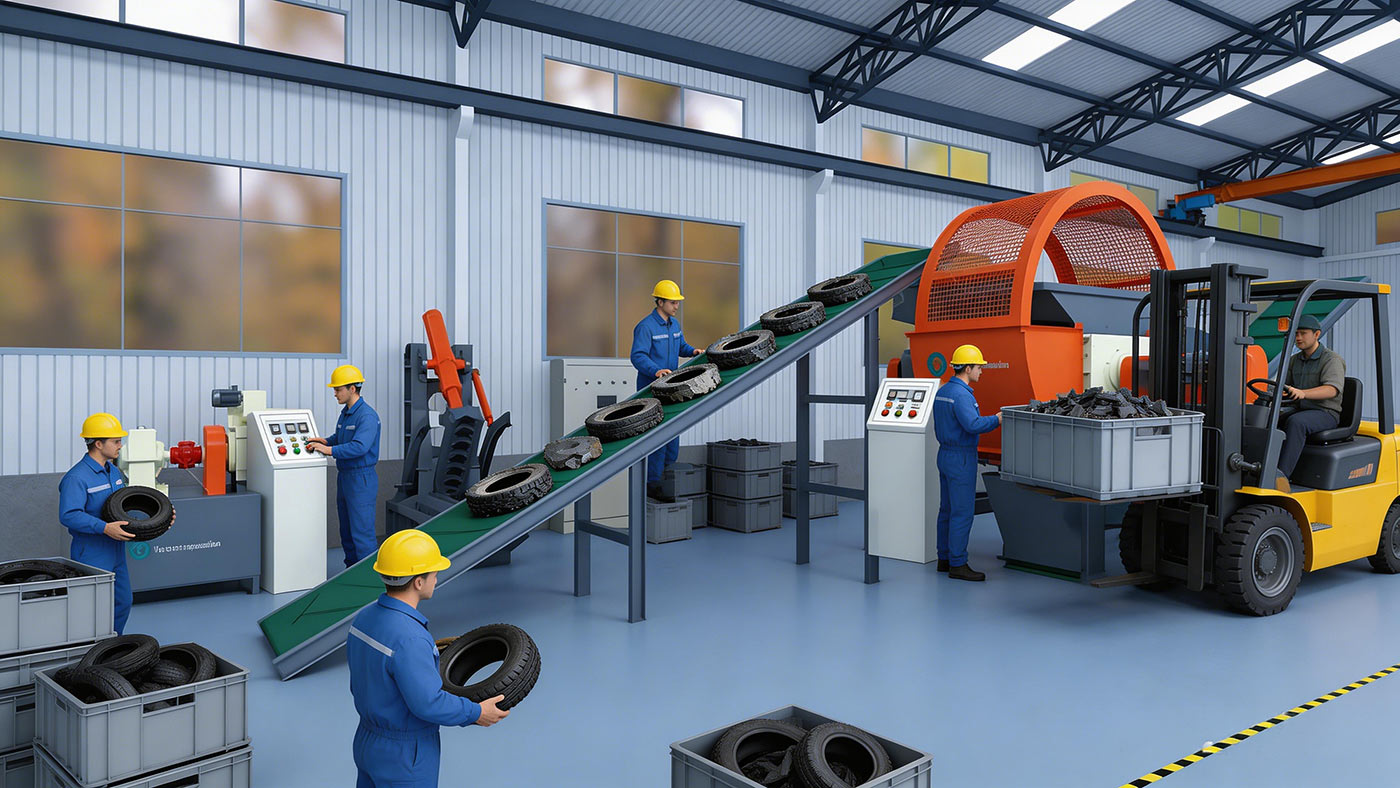
Think of a tire shredder as the heavy-duty cousin of your standard paper shredder—except instead of sensitive documents, it's chewing through steel-belted rubber. These machines are built like tanks because they have to be. We're talking about ripping through tires that could weigh 100+ pounds each, with steel wires woven throughout.
1.1 How These Machines Actually Work
The process is pretty straightforward, but it's what makes these machines so effective:
Feeding: Whole tires go into the hopper
Cutting: Rotating blades tear through the rubber like butter
Separation: Magnets pull out the steel wire as it processes
Output: Properly sized chips come out the other end
The secret sauce is high torque at low speed (think 15-25 RPM). This keeps the rubber from overheating and melting while still cutting through those steel belts cleanly.
1.2 Why Jump In Now?
We've been watching this industry for decades, and 2026 is shaping up to be a turning point:
Regulations are getting stricter—landfills are banning whole tires everywhere
Cement plants are buying big—they love tire-derived fuel (TDF)
Roads are going rubber—rubberized asphalt is exploding in demand
Developing markets are heating up—Southeast Asia and Africa are growing fast
2. Single Shaft vs. Double Shaft: What's Right for You?
This is THE question we get asked most. Here's the breakdown:
| Factor | Single Shaft | Double Shaft |
|---|
| Cutting Power | Great for standard passenger tires | Beats up OTR tires no problem |
| Speed | Up to 18 tons/hour | Up to 12 tons/hour |
| Output Quality | Nice, uniform chips | Coarser—might need a second pass |
| Upkeep | Easy, fewer moving parts | More involved, dual motors |
| Power Bill | 20-30% hungrier | More efficient per ton |
| Price Tag | $20K-$80K | $30K-$120K |
| Perfect For | High-volume, consistent material | Mixed loads, tough stuff |
Pro Tip: If you're mostly running passenger car and truck tires with pretty consistent quality, single shaft is your best bang for buck. But if you're grabbing whatever tires come your way—including those monster OTR tires from mining ops—double shaft is the way to go.
2.1 Quick Recommendations
| Your Situation | Go With |
|---|
| Passenger tires only, need 10+ tons/hr | Single Shaft YXS-1600 or bigger |
| Mixed bag including OTR tires | Double Shaft YXD-1200+ |
| Small shop, tight on space | Single Shaft Mobile Unit |
| Just starting out, 2-5 tons/hr | Single Shaft YXS-800 or YXS-1000 |
3. Figuring Out What You Actually Need
3.1 How Much Can You Process?
Be honest with yourself here—how many tons are you running per hour? And here's a pro tip from years in the field: assume you'll grow. The last thing you want is to max out your machine in 18 months and have to buy again.
| Model | Motor Power | Throughput | Best For |
|---|
| YXS-600 | 15×2 KW | 2-3 T/H | Small operations, mobile setups |
| YXS-800 | 22×2 KW | 3-5 T/H | Small to medium shops |
| YXS-1000 | 37×2 KW | 5-8 T/H | Medium operations |
| YXS-1200 | 45×2 KW | 6-10 T/H | Medium to large |
| YXS-1400 | 55×2 KW | 8-12 T/H | Large operations |
| YXS-1600 | 75×2 KW | 12-18 T/H | Industrial scale |
| YXS-2000 | 90×2 KW | 16-22 T/H | High-volume facilities |
| YXS-2600 | 160×2 KW | 25-60 T/H | Maximum capacity |
3.2 What Kind of Tires Are You Running?
Not all tires are created equal, and your shredder needs to match your material:
Passenger Car Tires
Truck Tiles
OTR (Off-The-Road) Tiles
These are the beasts—massive, thick steel belts
Only industrial-grade equipment can handle these
Usually need pre-cutting first
Tires with Steel Beads
3.3 What Are You Making?
Your output size determines your market—and your profits:
| Output Size | End Product | Market Price |
|---|
| 50-100mm | Tire-derived fuel (TDF) | $50-80/ton |
| 20-50mm | Rubber mulch, playground surfaces | $100-150/ton |
| 5-20mm | Rubber powder for road work | $150-250/ton |
| <5mm | Fine powder for new tires | $300-500/ton |
Money move: Smaller chips = bigger paydays. But more processing steps. Figure out what your local market wants before you buy.
4. The Tech Stuff That Actually Matters
4.1 Power vs. Torque—Don't Get Fooled
More horsepower sounds great in theory, but here's the thing—it's all about torque. High torque at low RPM is what gets through steel-belted tires without choking. Here's the breakdown:
Low speed (15-25 RPM): No overheating, clean cuts
High torque: Powers through steel without stalling
Less wear and tear: Your blades and bearings will thank you
Power consumption reality:
Small machines (YXS-600 to YXS-1000): 30-75 KW/H
Medium machines (YXS-1200 to YXS-1400): 90-110 KW/H
Big machines (YXS-1600 to YXS-2000): 150-180 KW/H
Industrial beasts (YXS-2600): 320+ KW/H
4.2 Blades—The Make-or-Break Component
Blades are the heart of your shredder. Get this wrong and you'll be replacing parts constantly. Here's your cheat sheet:
| Material | Hardness | Lasts | Best For |
|---|
| H13 | 58-62 HRC | 800-1,500 hours | Everyday use, best value |
| SKD11 | 58-62 HRC | 1,000-2,000 hours | Heavy-duty apps |
| D2 | 60-64 HRC | 1,500-2,500 hours | Industrial use |
| DC53 | 62-64 HRC | 2,000-3,500 hours | Maximum durability |
Budget heads up: A full blade set runs $2,000-$8,000 depending on model. Quality blades with proper care last 1-3 years.
4.3 Control Systems You Can't Skip
Must-haves:
PLC Control: Start, stop, reverse—all programmable
Overload Protection: Auto-reverse when things jam up
Emergency Stop: Non-negotiable for safety
Nice-to-haves (2026 standard):
Remote Monitoring: Check your machine from your phone
Touch Screen: Way easier to use
Auto-Lubrication: Less maintenance work for you
Quiet Operation: Critical if you're near residential areas
5. Features Checklist Before You Buy
Power and Speed: Make sure it can handle your throughput without strain
Work Area: Can it fit your biggest tire with room to spare?
Software: Look for RDWorks, LaserCAD, or LightBurn compatibility
Cooling System: Water cooling extends machine life significantly
Safety First: Emergency stops, enclosures, fume extraction—a must
Easy Maintenance: Accessible parts = less downtime = more money
Warranty: A solid warranty with good support is worth its weight in gold
6. The Money Talk
6.1 What You'll Actually Pay (2026)
| Tier | Price | Capacity | Break-Even |
|---|
| Entry-Level | $15,000-$30,000 | 2-5 T/H | 18-24 months |
| Mid-Range | $30,000-$60,000 | 5-15 T/H | 12-18 months |
| Industrial | $60,000-$150,000 | 15-40 T/H | 12-24 months |
| Heavy Industrial | $150,000+ | 40+ T/H | 24-36 months |
6.2 Hidden Costs Nobody Talks About
Here's what most buyers miss—the purchase price is just the beginning:
Electricity: $15,000-$80,000/year depending on hours
Blades: $4,000-$20,000/year in replacements
Wear parts (bearings, seals, belts): $2,000-$10,000/year
Labor: 1-3 operators at $15,000-$40,000/year each
Downtime: Every hour your machine is down, you're losing money
6.3 Real ROI Numbers
Here's what our customers are actually making:
| Revenue Source | What You Can Earn |
|---|
| Processing fee | $50-150 per ton |
| Rubber chips (20-50mm) | $100-200 per ton |
| Fine rubber powder | $300-500 per ton |
| Steel wire recovery | $150-250 per ton |
The math for mid-range equipment ($45K):
10 tons/day × 300 days × $80/ton = $240,000 gross
Operating costs: ~$100,000/year
You could break even in 6-12 months with solid throughput
Game changer: Your local market for rubber products makes or breaks this deal. Do your homework on demand before you spend a dime.
7. Getting Set Up and Running Right
7.1 Site Prep—Don't Skip This
Where you put your machine matters more than people think:
Floor space: 15-60 m² depending on model
Ceiling height: At least 4 meters for the big boys
Power: 380V, 50/60Hz—get an electrician to verify
Ventilation: Non-negotiable for heat management
Foundation: Concrete pad that can handle 500 kg/m²
7.2 Best Practices From the Field
Take It SlowDon't max it out day one. Ramp up throughput over 2-4 weeks. Your machine will thank you with a longer life.
Clean Your FeedSort out rocks, metal, and chemicals before they hit the blades. Foreign objects = damaged equipment.
Watch That TemperatureOverheating is a red flag. Either you're overloading or your blades are dull. Check those gauges.
Daily Walk-AroundLook for loose bolts, belt tension issues, leaks, and weird noises before each shift starts.
Keep RecordsMaintenance logs aren't just paperwork—they can add 20-30% to your machine's lifespan.
⚠️ Safety First: Never run these machines without proper training. Keep the area clear, fire extinguishers within reach, and make sure everyone knows where the emergency stop button is. This isn't the place to cut corners.
7.3 Mistakes That Cost People Money
We've seen these play out over and over:
❌ Buying on price alone
❌ Not planning for growth
❌ Skipping operator training
❌ Ignoring electrical requirements
❌ Cramming a big machine in a small space
8. Why Go With Yuxi Machinery?
8.1 Our Track Record
30+ years in the game
32 patents (including 3 invention patents)
90+ countries served—we know the export game
2,000+ installations worldwide
8.2 Quality Control
ISO 9001 certified—legit quality systems
CE compliant for Europe
15-person QC team that doesn't miss anything
Every machine runs for 72 hours before shipping
8.3 Support When You Need It
OEM/ODM: We build to your specs
Training: On-site or video—we've got you covered
Parts: 95% in stock, ships within 48 hours
24/7 support: Multi-language team, worldwide
9. Your Questions, Answered
Q: How long does setup take?
A: Basic setup is 2-3 days. Full installation with electrical, foundation, and testing? Figure 1-2 weeks. We walk you through every step.
Q: What about electrical needs?
Most industrial shredders want 380V three-phase power. Smaller units (YXS-600 to YXS-1000) can sometimes run on 220V depending on your location. Always have an electrician check it out.
Q: Do you help with installation?
Absolutely. We offer on-site installation (extra cost) or comprehensive video guides. Our tech team is on WhatsApp for real-time help.
Q: How long do these machines last?
A: With decent maintenance, 15-20 years is realistic. Major parts (motors, gearboxes) usually need swapping at 10,000-15,000 hours. Our DC53 blades have gone 3,000+ hours in tough commercial settings.
Q: Can I handle OTR tires on a regular shredder?
A: Short answer: no. OTR tires need industrial double-shaft units with 160+ KW. Trying to force them through smaller equipment will destroy your blades and possibly your motor. Check out our heavy-duty options here.
Q: How often do blades need replacing?
A: Usually every 200-500 hours. Watch for these warning signs: slower throughput, strange noises, or uneven chips. Dull blades actually cause more damage to your whole machine.
Q: What kills blades fastest?
Steel-belted tires, high speeds, and poor maintenance. Keep those blades sharp and your whole machine runs better.
Q: When will I make my money back?
A: Most customers hit break-even in 12-24 months. If you're running 15+ tons daily, you could see ROI in as little as 6 months. It all depends on how hard you run it and what the local market pays.
Q: What permits do I need?
A: Every country is different. Most require environmental permits for waste processing. We can share what we've seen work in 90+ countries, but check your local regs.
Q: Can it handle other rubber stuff?
A: Yep—hoses, belts, conveyor rubber all work. Just avoid anything with hidden metal or hazardous materials. Our complete recycling line guide covers multi-material setups.
Reference Sources
Global Tire Recycling Market Report 2026 - MarketWatch Research
Scrap Tire Recycling in the United States - US EPA
Tire-Derived Fuel (TDF) Guidelines - World Business Council for Sustainable Development
Industrial Shredder Maintenance Best Practices - Manufacturing.net
Rubber Powder Applications in Road Construction - Journal of Cleaner Production
Keep Reading
Wrapping It Up
Here's the bottom line: don't cheap out, don't undersize, and don't forget to plan for growth. Focus on:
Get the capacity right—30% more than you need today
Think total cost—purchase price is just the start
Pick a winner—support and reputation matter
Think ahead—your future self will thank you

 Shredding Machine
 Waste Recycling Line
 Optional Equipment