If you’re shopping for a shredder, you’ve probably noticed that the price and design vary wildly. As someone who’s spent plenty of time on the factory floor, I can tell you that picking the wrong one is a headache you don’t want.
It really comes down to how the machine "eats" the material. Let’s look at the mechanical reality of these two.
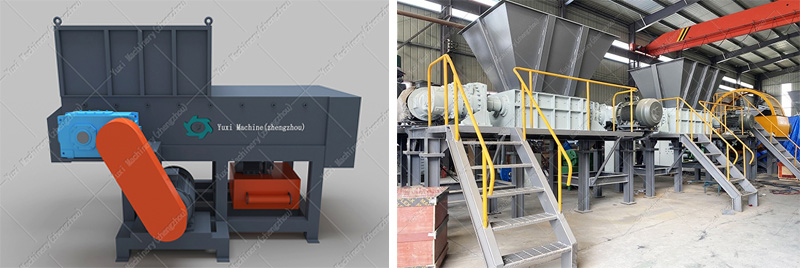
Single Shaft Shredders: The Precision Cutters
Think of a single shaft shredder as a high-speed grinder. It has one rotor with a bunch of small, square blades bolted onto it. Inside the hopper, there’s a hydraulic "pusher" that moves back and forth. Its only job is to shove the material against the spinning rotor so the blades can nibble away at it.
The best thing about this setup is the screen. You can swap out screens with different hole sizes at the bottom. The material stays in the machine until it’s small enough to fall through. If you need a very specific, uniform size—say for a plastic injection machine—this is your go-to.
Best for: Solid plastic chunks, wood pallets, and rolls of paper.
The upside: You get a nice, consistent flake.
The downside: They can be a bit noisy because they run at a higher speed.
Double Shaft Shredders: The Heavy-Duty Beasts
A double shaft shredder is a completely different animal. It doesn't use a pusher or a screen. Instead, it has two parallel shafts with big, hooked teeth. These shafts rotate slowly but with massive torque. They basically grab the material and tear it to pieces.
This machine is built for "volume reduction." It doesn't care about making things look pretty or uniform; it just wants to crush whatever you throw at it. Since the teeth pull the material down themselves, it’s self-feeding.
Best for: Car tires, metal drums, big furniture, and mixed trash.
The upside: It’s almost impossible to jam. If it hits something too hard, the PLC controller just reverses the shafts for a second and tries again.
The downside: You don’t get a uniform size. You get rough strips and chunks.
Technical Breakdown
| Feature | Single Shaft | Double Shaft |
| Cutting Style | Grinding/Cutting | Shearing/Tearing |
| Rotor Speed | Fast (80-90 RPM) | Slow & Powerful |
| Output | Small, even flakes | Rough strips |
| Feeding | Hydraulic Pusher | Self-grabbing |
| Noise Level | Can be loud | Surprisingly quiet |
My Take: Which one should you buy?
If you’re a recycler who needs to turn clean plastic scrap into a specific size to sell back to a factory, get the Single Shaft. It’s precise, and maintenance is straightforward because you can just rotate the blades when one edge gets dull.
But, if you’re running a waste plant and you’re dealing with "ugly" stuff—tires, metal, mixed debris—go for the Double Shaft. It handles the heavy lifting and high volumes (we have models that do 60 tons an hour) without breaking a sweat.
Quick tip: Always check your blade bolts. I’ve seen more machines break because of a loose bolt than because of "tough" material. Keep them tight, keep the bearings greased, and the machine will last you a decade.
summary
It really boils down to your end goal: if you need precise, uniform flakes for direct recycling, go with the Single Shaft because its screen gives you total control over size. But if you’re dealing with bulky, tough waste like tires or metal and just need to crush it fast, the Double Shaft is the winner—it trades precision for raw, high-torque power and massive volume.

 Shredding Machine
 Waste Recycling Line
 Optional Equipment